

Hampton University Flight School Partner
Thrust Flight is an authorized flight training provider for Hampton University’s Department of Aviation. Students in Hampton’s Bachelor of Science in Flight Education earn every certificate and rating an airline career requires while completing an accredited degree.

Aviation Has Deep Roots at Hampton
Hampton University has been educating leaders since 1868. Its Department of Aviation sits within the School of Engineering, Architecture and Aviation and offers a Bachelor of Science in Flight Education accredited by the Aviation Accreditation Board International. Only a small number of collegiate aviation programs hold that accreditation.
The department was formally founded in 1985 but Hampton has been training pilots since 1939.
Hampton and the Civilian Pilot Training Program
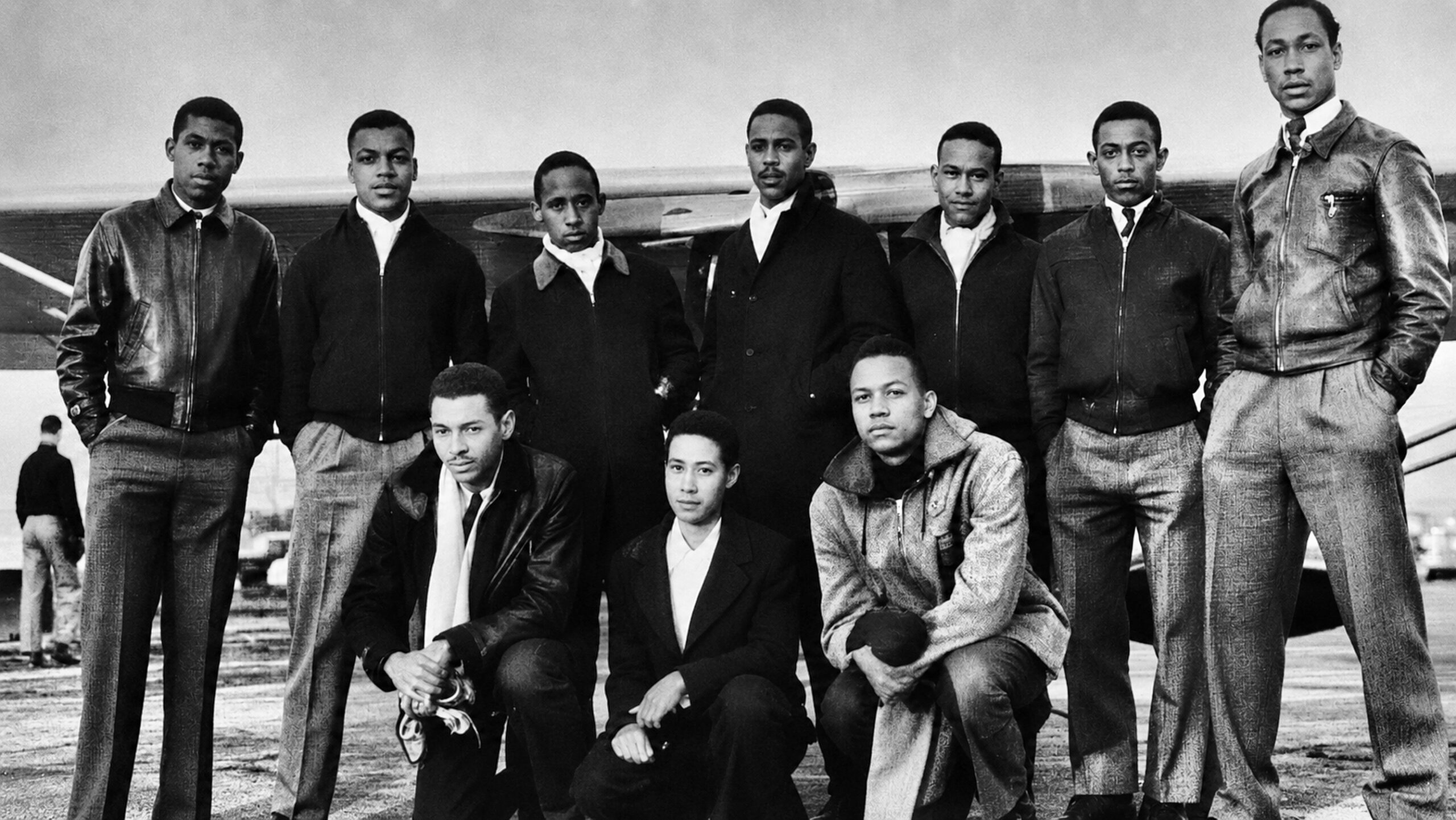
President Franklin D. Roosevelt signed the Civilian Pilot Training Act in 1939. Hampton Institute was selected as one of only six historically Black colleges and universities to run the program.
175
pilots certificated at Hampton between 1939 and 1942.
900+
airmen taught by Hampton graduate Roscoe Draper at Tuskegee.
6
HBCUs selected nationwide for the Civilian Pilot Training Program.
The Pilots Hampton Sent to Tuskegee
A number of the 1,007 documented Tuskegee Airmen completed their first flight training at Hampton Institute before heading to Alabama.
- Roscoe Draper earned his pilot certificate through Hampton’s CPTP in 1940. He became one of the first ten men of color selected as a flight instructor at Tuskegee and taught more than 900 airmen. He was still flying past his hundredth birthday and died in 2024 at the age of 105.
- Edward A. Gibbs completed the Civilian Pilot Training Program at Hampton, earned his commercial certificate and instructor rating, and served as a civilian flight instructor at Tuskegee during the war. He later founded Negro Airmen International, the oldest African American civilian aviation organization in the country.
- James Alonzo Walker, Vernon Haywood, Wilmore Leonard and Walter Lawson are among the Hampton-trained pilots who went on to distinguished military service as Tuskegee Airmen.
How the Partnership Works
Obtain your degree from Hampton University, and your pilot certificates from Thrust Flight
Hampton University provides
- The degree and the curriculum
- AABI accreditation
- Admissions and academic advising
- Academic oversight by a designated Flight Education Program Manager and faculty
Thrust Flight provides
- Aircraft fleet and maintenance
- FAA Part 141 certificate and Training Course Outlines
- Certificated flight instructors
- Scheduling, recordkeeping, safety coordination and progress reporting to Hampton faculty
You take your aviation coursework on Hampton’s campus and fly with Thrust Flight instructors at the One Lear Drive hangar at Newport News/Williamsburg International Airport. Training is delivered under Thrust Flight’s Part 141 certificate and structured to align with AABI criteria, so your flight training counts toward the degree Hampton awards.
Certificates and Ratings You Will Earn
Students in Hampton’s Flight Education curriculum train through the full professional pilot sequence with Thrust Flight:
- Private Pilot Certificate
- Instrument Rating
- Commercial Pilot Certificate
- Multi-Engine Rating
- Certified Flight Instructor and Certified Flight Instructor Instrument
You will fly current-generation Piper Archer TX aircraft with Garmin G1000 glass cockpits and air conditioning, and Piper Seminole twins for multi-engine training. Thrust Flight maintains its own fleet, which keeps aircraft availability under our control rather than a vendor’s.
Thrust Flight also holds FAA Examining Authority. Checkrides are conducted in house instead of waiting on an outside examiner, which keeps flight training on the same calendar as your coursework.
How Payment Works
Fixed Cost, Not Pay As You Go
Most flight schools bill by the hour. You rent the airplane, you pay the instructor, and at the end of the month you find out what your training cost. When every minute carries a price, students start making training decisions based on their bank balance instead of their progress. They skip the extra lap in the pattern. They do not ask for the review flight they know they need.
Thrust Flight prices by the course, not by the hour. Every course carries a fixed price, and each section of that course is paid for before you begin it. You know the number in advance, and once a section is paid for you fly it to standard.
Each course includes a maximum number of flight hours: 60 for Private Pilot, 42 for Instrument, 60 for Commercial, 40 for Multi-Engine including time building, 28 for CFI Airplane and 8 for CFI Instrument. Those maximums are set above FAA minimums, based on what it has actually taken our students to reach standard, and most students finish inside them. A student who exceeds the maximum on a rating is invoiced for the overage on that rating at current hourly rates. Overages on one course cannot be offset against unused hours from another.
Who bills you for what. Hampton University bills you for tuition, room, board and academic fees, exactly as it does for any other degree program. Thrust Flight bills you directly for flight training. Flight charges do not pass through your Hampton student account, and Hampton carries no lending obligation, guarantee, or financial responsibility for flight training costs.
Three Ways to Pay
Pick whichever of these fits your situation. The total is the same in all three.
Finance the program
Fund the whole program through Sallie Mae®, Stratus Financial, or another private lender. One approval covers your entire training.
Three installments
Pay the total program cost in three installments, spaced two months apart. No lender involved, and the price is locked from the start.
Pay section by section
Pay for each section of training before that section begins. Seventeen payments averaging about $7,000, roughly one every six weeks. The smallest commitment at any one time.
What Each Course Costs
Six courses, one price each. Orientation, ground instruction, aircraft, instructor time, exam fees and administrative costs are built into every figure below. There are no separate fees added at the end. Each course is then broken into payments, and each payment is made before the section of training it covers.
| Course | Payments | Per Payment | Course Price | Typical Duration |
|---|---|---|---|---|
| Private Pilot | 3 | $8,650 | $25,950 | 6 months |
| Instrument Rating | 3 | $8,225 | $24,675 | 4 months |
| Commercial Pilot | 3 | $9,925 | $29,775 | 8 months |
| Multi-Engine | 4 | $4,900 | $19,600 | 2 months |
| CFI Airplane | 2 | $7,825 | $15,650 | 3 months |
| CFI Instrument | 2 | $2,175 | $4,350 | 1 month |
| Total Program Cost | 17 | $120,000 | 24 months |
What This Looks Like Over Two Years
Going from your first lesson to a Flight Instructor certificate takes about two years alongside your Hampton coursework. Paying section by section breaks the cost into seventeen payments spread across that time.
17
payments across the whole program
~$7,059
average payment
~43 days
typical gap between payments
24 months
start to Flight Instructor
That works out to a payment roughly every six weeks. Payments come closer together during Instrument, Multi-Engine and the instructor courses, and further apart during Private and Commercial, which run longer. You always know the number before you begin.
Scholarships
A significant amount of scholarship money goes unclaimed in aviation every year, usually because students never find the awards they qualify for. Aviation START maintains a free, searchable directory of flight training scholarships. There is no account required and no fee to use it.
Search the directory at aviationstart.org/flightscholarships. Filter by the criteria that apply to you, then apply directly through the organization offering the award. Scholarship funds can be applied toward your flight training costs at Thrust Flight.
Refunds and Withdrawal
Flight training is a serious financial commitment. Thrust Flight publishes its refund policy as a standalone document so you can read the terms before you sign anything.
Cancel your enrollment within three days of signing the enrollment agreement and you receive a full refund of everything paid. Cancel after that and you still receive a full refund, less a $150 drop fee.
If you withdraw partway through the program, course fees for any course you have not started are refunded in full. Courses already underway are refunded on a phased schedule: 66% of the course fee is refundable if you have flown less than a third of the required hours, 33% if you have flown between a third and two thirds, and the fee is nonrefundable past two thirds. Application fees are not refundable.
Refund checks are issued within 30 days of a drop, cancellation, withdrawal or termination. If you financed your training, the refund is directed to your lender up to the amount they paid on your behalf.
Read the complete Thrust Flight refund policy. An admissions advisor will walk you through it before you enroll.
Where You Will Train
Flight operations are based at the One Lear Drive hangar at Newport News/Williamsburg International Airport (PHF), about a fifteen minute drive from Hampton’s campus.
PHF is a tower controlled airport with scheduled airline service and two runways: an 8,003 foot primary and a 6,526 foot crosswind runway. Students work with live ATC on every flight from the first lesson. Langley Air Force Base sits seven miles away and Norfolk International is twenty miles southeast, so you learn to operate in busy airspace from the start. That experience transfers directly to airline flying.
Ready to Get Started?
Information on the Bachelor of Science in Flight Education is available from Hampton University’s Department of Aviation. For questions about aircraft, instructors, scheduling or payment, contact our admissions team.